
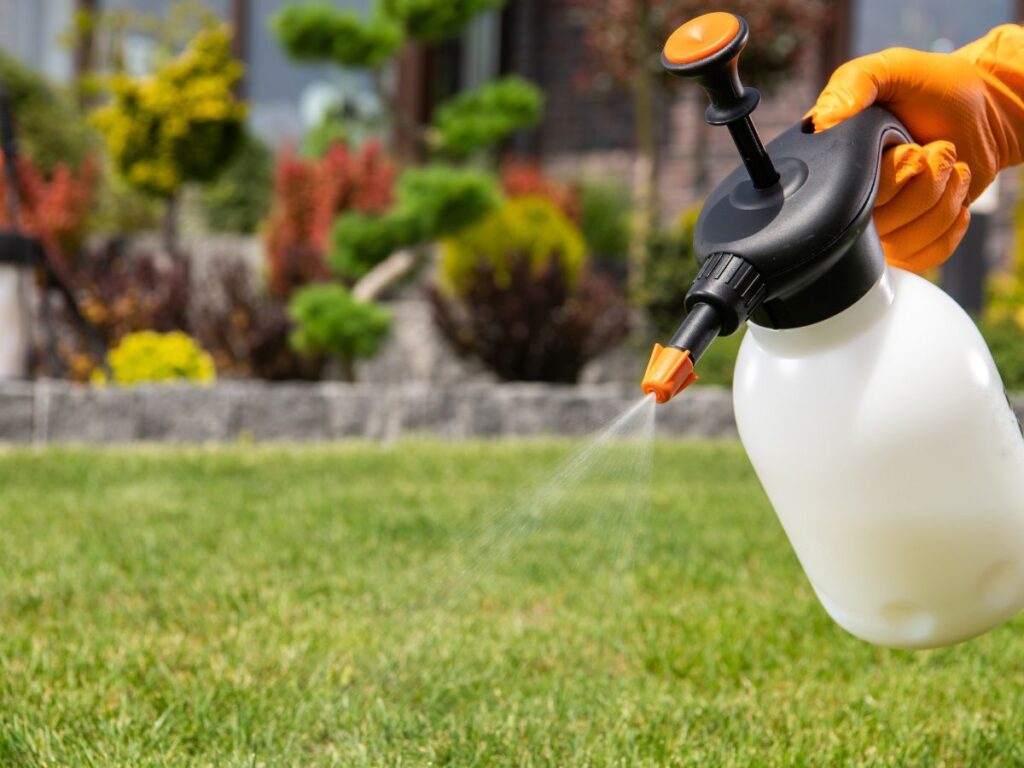
There is a brief window in early spring — typically late March through mid-April in Port Orchard and across Kitsap County — when weed control is most effective and most efficient. Before weed seeds have germinated at scale, when the soil has warmed just enough to activate seeds but not enough to push them into rapid growth, pre-emergent treatment can intercept an entire season’s weed pressure before it becomes visible. Miss that window, and you spend the rest of the year reacting to established weeds that are far harder to control than seeds that never germinated.
This guide covers the most common weeds Western Washington homeowners face in their lawns and landscape beds, how weed control works in the Pacific Northwest’s specific conditions, why timing is the decisive factor, and how Green Earth Landscape Management approaches weed management as part of year-round property care in Kitsap County.
The Weed Pressure Profile in Port Orchard and Kitsap County
Western Washington’s climate — mild, wet winters and warm dry summers — creates specific weed pressure patterns that differ from drier or colder regions. Knowing which weeds you are actually dealing with helps understand why the control approach matters as much as the timing:
Lawn weeds — the turf competition problem
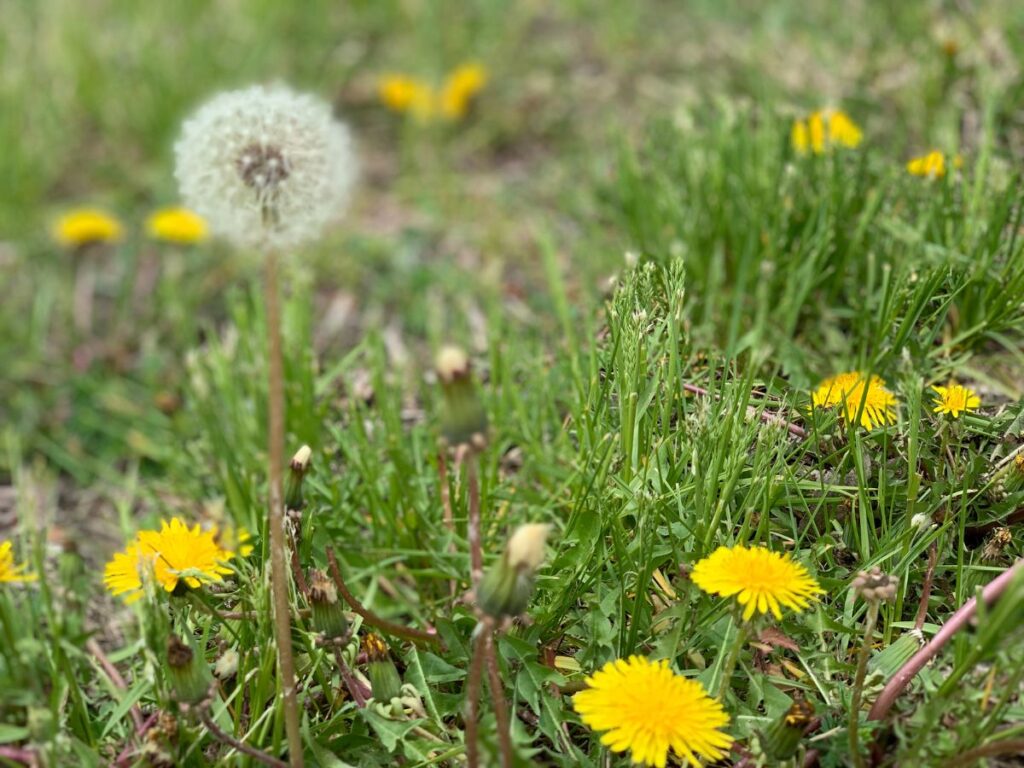
- Dandelion: The most recognisable lawn weed in Kitsap County. A deep taproot makes mature dandelions highly tolerant of surface disturbance — mowing removes the flower head but not the plant. Dandelions germinate in early spring when soil temperatures reach 50°F, making early pre-emergent treatment effective, and in fall. Once established, post-emergent broadleaf herbicide is the appropriate response
- Creeping buttercup: Exceptionally common in wet Pacific Northwest lawns and one of the most difficult to control. Buttercup spreads through stolons — above-ground runners — that root at nodes and can spread several feet in a single season. It thrives in wet, poorly draining soil and shaded areas, which describes a significant portion of South Puget Sound residential lawns. Dense, healthy turf is the best long-term defence; buttercup does not establish well in thick, actively growing grass
- Clover: White clover is a nitrogen-fixing legume that many homeowners tolerate or even welcome, but it spreads aggressively under Pacific Northwest conditions and can crowd out desired turf grasses in thinner areas of the lawn. Broadleaf herbicides control clover effectively, but timing matters — clover treated when actively growing responds better than clover treated during dormancy
- Moss: Technically not a weed but arguably the most significant turf competitor in Western Washington. Moss does not respond to standard broadleaf herbicides — it requires iron-based treatment and, critically, correction of the underlying conditions that allow it to establish: shade, compaction, poor drainage, and low soil pH. See our moss management discussion below
- Annual bluegrass (Poa annua): A winter annual that germinates in fall, grows through the mild Pacific Northwest winter, sets seed in spring, and dies in summer. On lawns where Poa annua is present, it produces a noticeable seasonal variation — green and visible in spring, then dying out in summer patches. Pre-emergent treatment in early fall is the most effective control point
Bed and border weeds — the competition for landscape plantings
- Blackberry (Himalayan blackberry): The most aggressive landscape weed in Western Washington and one of the most difficult to fully eradicate. Himalayan blackberry spreads via bird-dispersed seeds and underground root systems, and a single established cane can produce dozens of new growth points from the root system even after the above-ground cane is cut. Control requires persistent multi-season management — repeat cutting, systemic herbicide treatment to the root, and physical root removal in accessible areas
- English ivy: Another invasive species widespread across the South Puget Sound that spreads aggressively under the shade conditions common in Pacific Northwest gardens. Ivy is challenging to control because it regenerates readily from root fragments and requires sustained removal effort over multiple seasons to fully eliminate from a bed
- Bittercress and hairy bittercress: Small winter annuals that germinate in fall, produce seed in early spring, and explosively discharge seeds that can travel several feet. A single plant can produce hundreds of seeds, making early-season removal before seed set critical to preventing exponential population growth
- Oxalis: Commonly called wood sorrel, oxalis is pervasive in Pacific Northwest landscape beds and highly persistent — its underground bulblets and root system regenerate readily after removal and respond poorly to most herbicides. Dense mulching and manual removal over multiple seasons is the most reliable long-term management approach
Pre-Emergent vs Post-Emergent Weed Control — How the Tools Work
Pre-emergent herbicides:
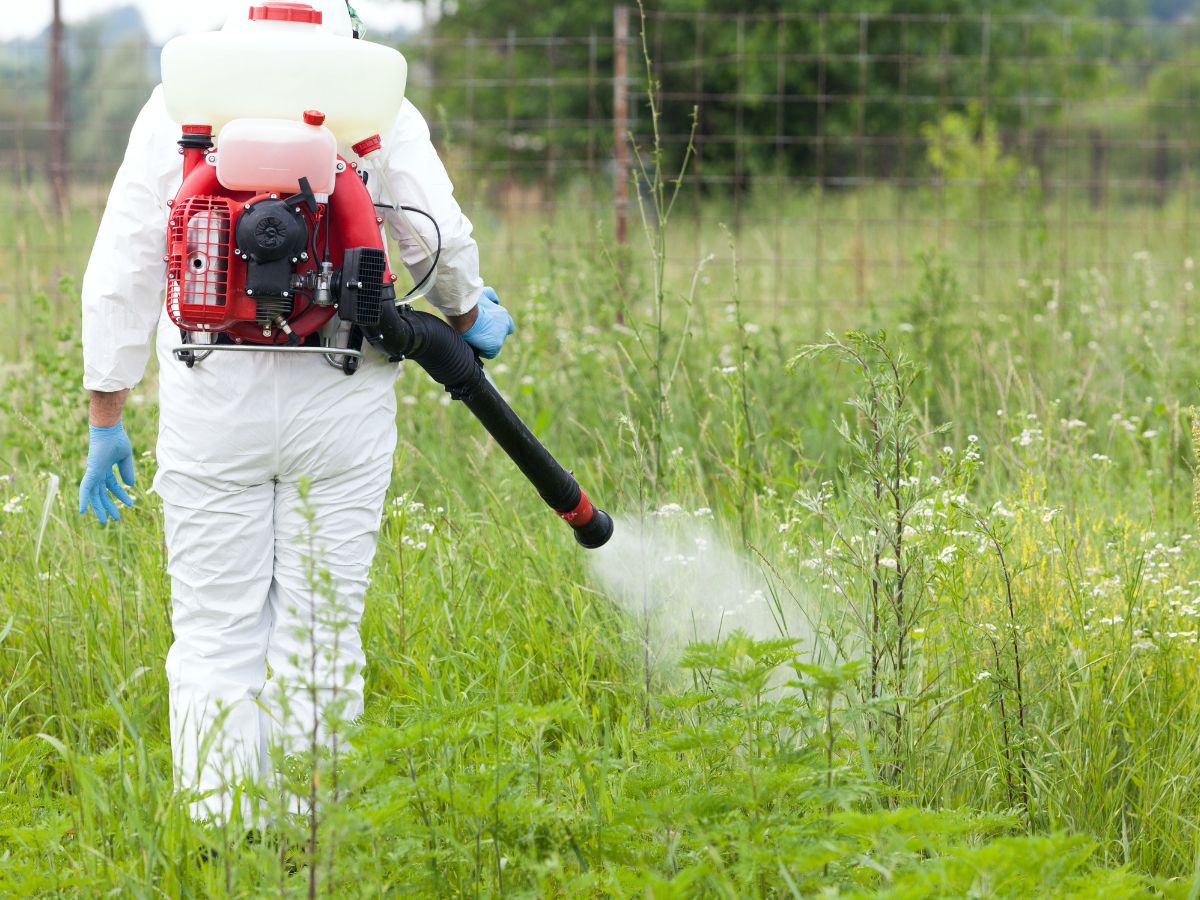
Pre-emergent herbicides do not kill existing weeds — they prevent germinating seeds from establishing by interfering with the seedling’s early root development. Applied to soil before weed seeds germinate, they create a chemical barrier at the soil surface that prevents new weed establishment for a window of typically 8 to 12 weeks, depending on product and soil conditions.
Pre-emergents are the most efficient weed control tool available because they prevent weeds rather than treating established ones — but they require correct timing and are ineffective after germination has occurred. In Port Orchard and Kitsap County, the spring pre-emergent window typically opens in late March and should be completed before consistent temperatures above 55°F, which can arrive as early as mid-April.
Critical limitation: Pre-emergents also prevent grass seed from germinating. Areas scheduled for overseeding must not receive pre-emergent treatment. This is one of the most common conflicts in spring lawn care programs, and coordinating the timing of pre-emergent application and overseeding requires deliberate planning — not a simple one-size calendar.
Post-emergent herbicides:
Post-emergent herbicides treat existing, established weeds. They are divided into selective herbicides (which target specific plant types — broadleaf herbicides that kill dandelions without affecting grass, for example) and non-selective herbicides (which kill any plant they contact and require careful application).
Post-emergent broadleaf herbicide is the appropriate tool for established dandelions, clover, and plantain in lawns. It is most effective when weeds are actively growing — which in Western Washington means spring and early fall, not midsummer when weeds may be heat-stressed and less responsive.
Effective weed control is not a one-time application — it is an ongoing component of landscape management through the full season. Our residential landscape maintenance in Port Orchard from Green Earth includes proactive weed management as part of the regular care program, addressing both pre-emergent timing and post-emergent treatment as weeds emerge through the season.
Why Timing Is the Decisive Factor in Kitsap County Weed Control
The difference between a spring weed control program that produces meaningful results and one that feels like reactive work all season is almost entirely timing. Here is why early action produces disproportionate returns in Western Washington:
- Pre-emergent effectiveness window is narrow: The period between soil warming to germination temperature and the point where most weed seeds have already germinated is 2 to 4 weeks in this climate. Pre-emergent applied in this window prevents an entire season of weed germination; pre-emergent applied after the window has closed produces little benefit
- Established weeds compete for turf recovery resources: Spring is when turf grass is coming out of winter stress and trying to rebuild density. Weed competition during this recovery period is disproportionately damaging — weeds that germinate in April and establish through May are competing directly with turf at the moment when the turf needs every available resource for its own recovery
- Blackberry and invasive species gain ground fast in spring: Himalayan blackberry grows several inches per week under Pacific Northwest spring conditions. A cane that is small and manageable in March is a significant, entrenched growth by May. The spring window is the most effective moment for aggressive management of invasive species in landscape beds
- Bittercress goes to seed before most homeowners notice it: This winter annual completes its seed cycle and disperses seeds by April or early May — often before homeowners have started spring garden work in earnest. Manual removal after seed dispersal is ineffective; removal before seed set in March reduces next year’s population significantly
Moss — Why It Requires a Different Approach Than Standard Weed Control
Moss is the most pervasive turf problem across Port Orchard and Kitsap County, and it does not respond to the herbicide tools used for broadleaf weeds. Understanding why it requires a different treatment strategy is important for setting realistic expectations:
Moss establishes and spreads where conditions favour it: shade, compaction, acidic soil (below pH 6.0), poor drainage, and thin turf. Killing existing moss with iron sulphate or ferrous sulphate is straightforward — these iron-based treatments turn moss black and kill it within 2 to 4 weeks. But without addressing the underlying conditions, moss re-establishes in the same areas within one to two seasons.
A complete moss management program addresses:
- Kill: Iron-based treatment to eliminate existing moss — done in spring when moss is actively growing and most susceptible to treatment
- Remove: Raking or dethatching to physically remove the dead moss material that would otherwise mat down and continue shading the soil surface
- Correct soil pH: Lime application to raise soil pH toward the 6.0 to 7.0 range where grass thrives and moss struggles — typically applied in fall when rain works it into the soil
- Improve drainage and compaction: Core aeration to address the compaction and poor drainage that create moss-favourable conditions
- Thicken turf: Overseeding to rebuild turf density in areas where moss has thinned the grass — dense, actively growing turf prevents moss from re-establishing
All of these steps work together. Skipping any of them — killing moss without removing it, or removing moss without overseeding the cleared areas — produces partial results that the moss reclaims within a season.
Weed Control in Landscape Beds — A Different Set of Tools
Lawn weed control and bed weed control use different approaches because the objectives and the plant communities are different:
- Mulch as the primary pre-emergent: A consistent 2 to 3 inch layer of quality bark mulch is the most effective pre-emergent tool in landscape beds — it blocks light to germinating weed seeds and significantly reduces establishment. Mulch applied in spring before weed germination is more effective than mulch applied after weeds have already emerged
- Hand removal for established weeds: In beds with valuable ornamental plantings, selective hand removal is the safest approach — herbicides that contact ornamental plant foliage or enter the root zone can damage or kill them
- Non-selective herbicide for bare ground and invasive species: Where beds are being cleared of invasive species or where large areas of bare soil need to be kept weed-free before planting, non-selective herbicide under careful application conditions is effective. This approach is not appropriate in planted beds where spray drift or root uptake could damage ornamentals
- Systemic herbicide for blackberry and English ivy: These invasive species require systemic treatment that reaches the root system rather than surface contact products. Glyphosate or triclopyr applied to cut stems or foliage in late summer and fall, when the plant is translocating resources to its roots, produces the best penetration of systemic products to the root system where they need to be active
The Relationship Between Weed Pressure and Lawn Density
The most effective long-term weed control strategy in Western Washington is also the simplest to state: a thick, healthy, actively growing lawn outcompetes most weeds on its own. Weeds establish in thin areas, bare patches, and stressed turf — they do not typically establish in dense, vigorous grass that is growing well.
This means that weed control and turf improvement are not separate programs — they are the same program approached from different directions. Aeration and overseeding that improve turf density simultaneously reduce the weed pressure that takes advantage of thin areas. Pre-emergent treatment that prevents new weed establishment gives the turf time to recover and thicken without additional competition. Weed control that reduces the existing weed population removes competitors that are consuming the water and nutrients the turf needs to grow more densely.
Our seasonal yard cleanup and landscape maintenance services from Green Earth in Port Orchard approach weed management as an integrated component of turf improvement — not a separate treatment program applied on a different schedule from everything else.
Commercial and HOA Weed Control in Kitsap County
Commercial properties, HOA communities, and condominium complexes have weed management needs that are similar in type but larger in scale and more visible in impact than residential properties. Weeds in entrance beds, parking lot borders, and community turf areas create a maintenance image that affects tenant and resident satisfaction. Green Earth provides commercial landscape maintenance and weed control services in Kitsap County — including pre-emergent programs, invasive species management, and bed maintenance — scaled to the size and visibility requirements of commercial and HOA properties throughout the South Puget Sound.
Schedule Weed Control Services in Port Orchard and Kitsap County
The spring pre-emergent window opens in late March and closes by mid-April in Port Orchard — timing that most homeowners miss while they are still thinking of spring as the season that has not quite started yet. Schedule weed control services in Port Orchard and Kitsap County with Green Earth Landscape Management by calling (360) 340-6803 or requesting an estimate online. Our team will assess your specific weed pressure, apply the right treatment at the right time, and integrate weed management into a complete care plan that addresses the turf density and soil conditions that determine long-term weed pressure.
Stop reacting to weeds. Get ahead of them this spring.
Call (360) 340-6803 — Weed Control Services in Port Orchard, WA | Green Earth Landscape Management