
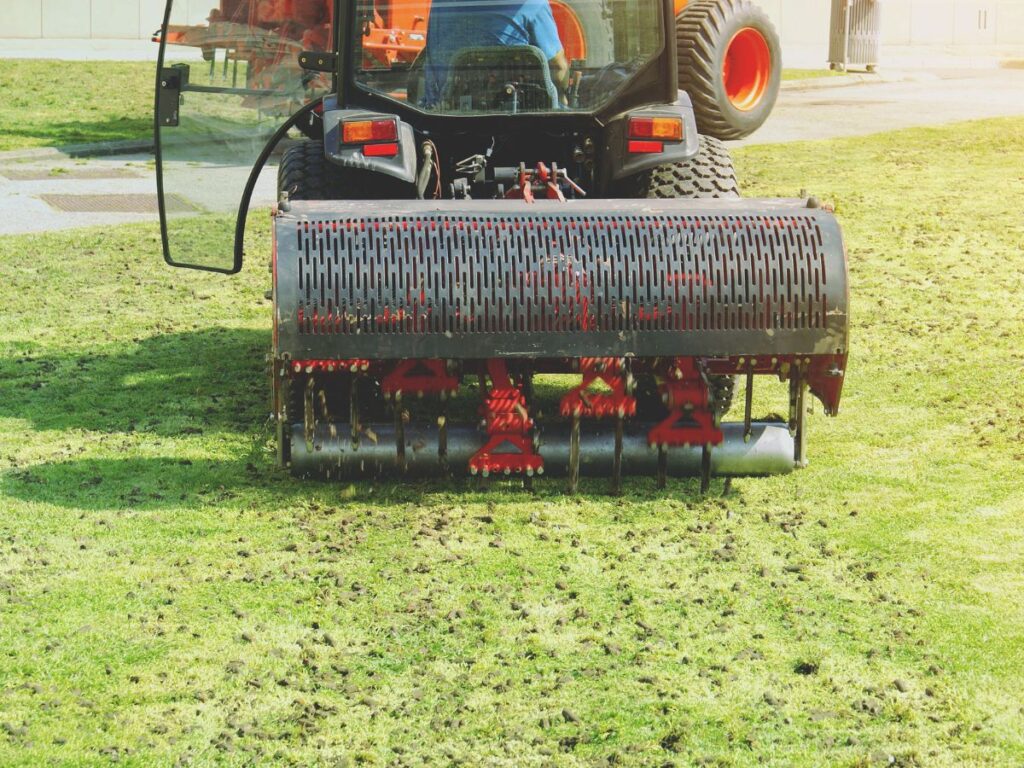
If you have been fertilising your lawn faithfully, watering consistently, and still watching the turf struggle — thin in some areas, mossy in others, slow to green up after winter — the problem is most likely not what you are putting on the surface. It is what is happening beneath it. Soil compaction is the hidden culprit behind a significant proportion of the lawn problems we see across Port Orchard and Kitsap County, and core aeration is the most direct intervention for addressing it.
This guide covers exactly what aeration does, why Western Washington’s specific soil conditions make it particularly important in this region, why spring is the right timing for most Port Orchard lawns, and what to do before and after the service to get the most out of it.
What Lawn Aeration Actually Does
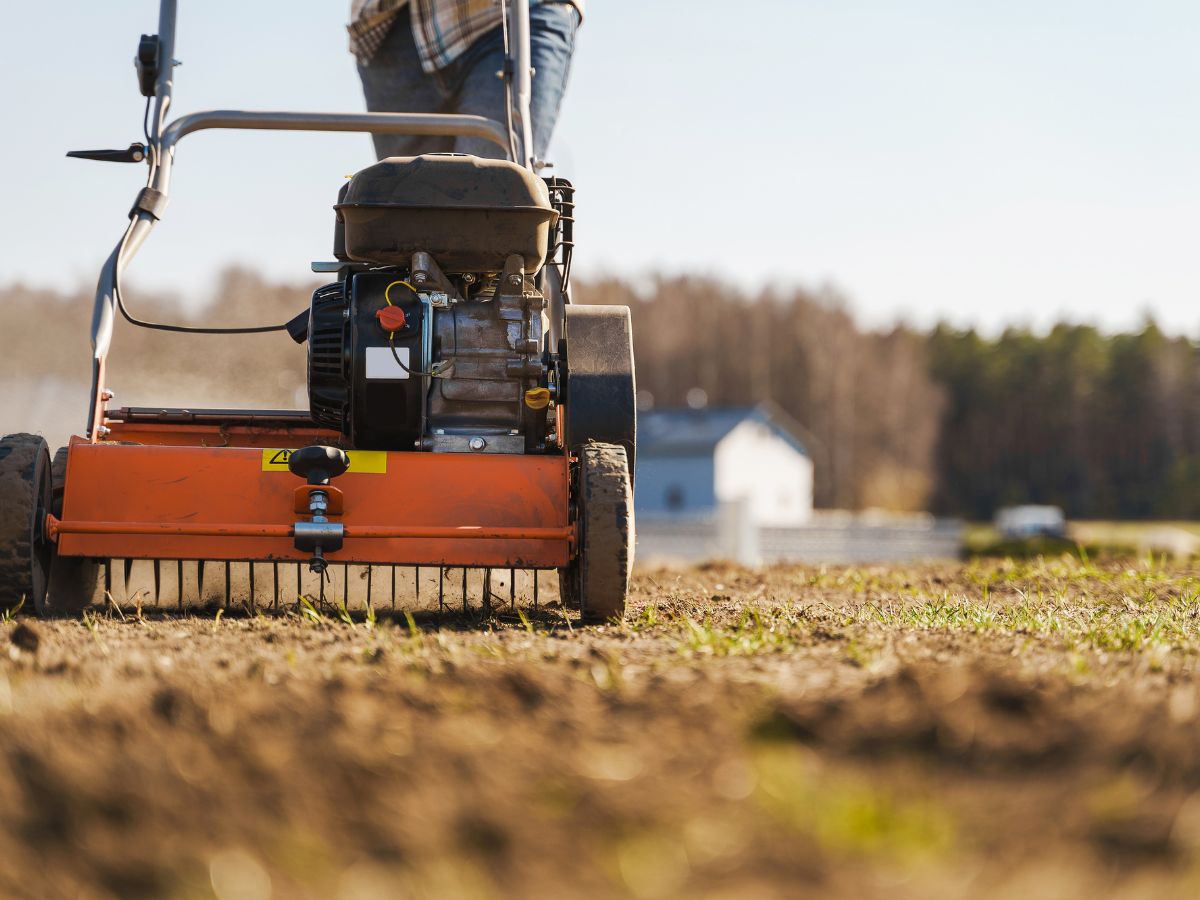
Core aeration — the standard professional method — uses a machine with hollow tines that pull small plugs of soil from the ground, typically 2 to 3 inches deep and spaced 2 to 4 inches apart across the lawn surface. The holes left behind and the plugs deposited on the surface do several things simultaneously:
- Relieves compaction: The extracted cores physically break up compressed soil, creating channels of loosened material that allow air, water, and roots to penetrate layers that were previously impermeable
- Improves water infiltration: Compacted soil repels water, causing it to run off the surface rather than penetrate to the root zone. Aeration holes allow water to enter the soil profile rather than sheet off the surface into drainage areas
- Enhances gas exchange: Grass roots require oxygen, and compacted soil prevents the exchange of gases between the soil and the atmosphere. Aeration restores the oxygen supply to the root zone, improving root health and growth activity
- Reduces thatch: The cores deposited on the surface contain soil microorganisms that accelerate the breakdown of thatch — the layer of dead organic material that accumulates between the soil surface and the living grass blades. As the plugs break down over several weeks, they inoculate the thatch layer with decomposers that reduce it over time
- Creates a seed bed: The holes and loose material created by aeration provide the ideal seed-to-soil contact that new grass seed needs to establish. Overseeding immediately after aeration dramatically improves germination rates compared to seeding on unprepared turf
Why Western Washington Lawns Need Aeration More Than Most
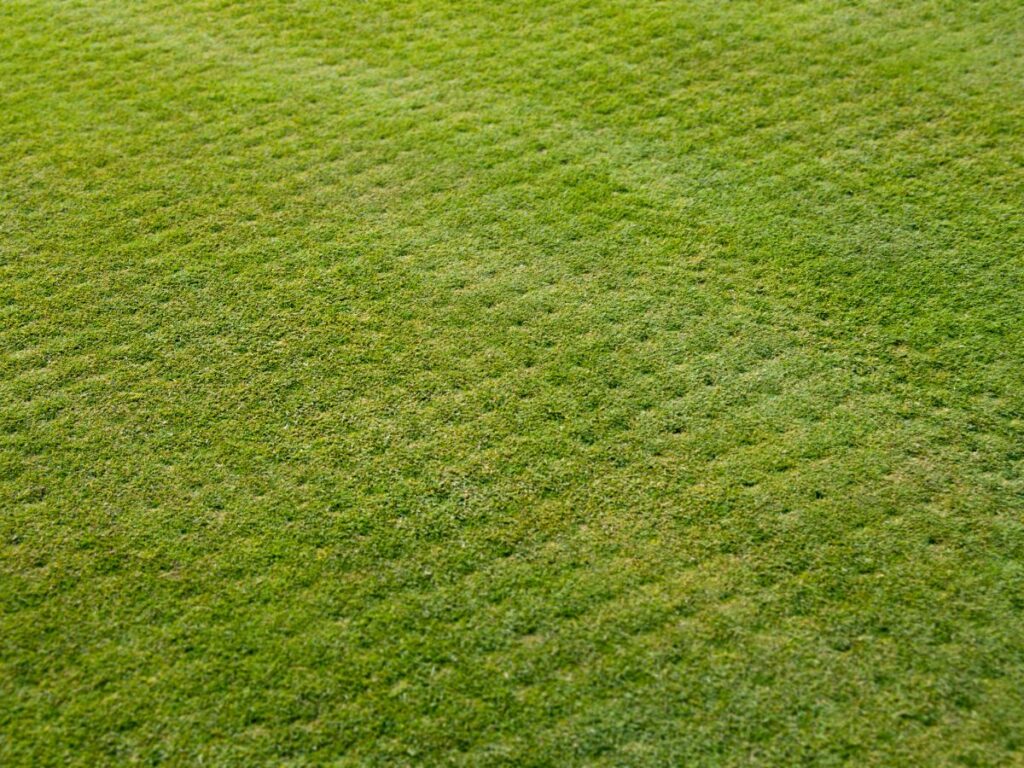
Soil compaction is a universal lawn problem, but several conditions in Port Orchard and Kitsap County make it more acute here than in many other regions:
Heavy clay soils
The Puget Sound lowlands are dominated by clay-heavy soils that have poor natural drainage and compact significantly more readily than sandy or loamy soils. Clay particles bond tightly when compressed and remain compacted much longer than other soil types. A Port Orchard lawn on native clay soil that receives normal foot traffic and rainfall can develop significant compaction within a single growing season — and that compaction persists year after year without intervention.
Year-round moisture
Western Washington’s rainfall pattern — heavy precipitation from October through April, followed by a relatively dry summer — creates a specific compaction dynamic. Wet soil compacts readily under any pressure: foot traffic, equipment passes, even rainfall impact on unprotected soil. By the end of a Pacific Northwest winter, lawns have been subjected to months of compaction-promoting wet conditions. The soil profile that emerges into spring is typically more compacted than it was going into fall.
Moss and poor drainage creating a vicious cycle
Compacted soil drains poorly, which maintains surface moisture, which promotes moss establishment, which shades turf grass and further suppresses root development — which reduces the turf’s ability to improve the soil structure through root activity. Aeration breaks this cycle by addressing the drainage and compaction issues at their root, giving turf an opportunity to out-compete moss without the structural disadvantage of compressed soil.
Low light and slow winter recovery
Pacific Northwest winters provide fewer daylight hours and lower light intensity than most of the country. Grass that cannot photosynthesize effectively through winter emerges into spring weaker than it would be in sunnier climates, and the root system’s ability to penetrate compacted soil when it is already energy-depleted is limited. Aeration done at the start of the growing season gives roots a path of least resistance to expand into — compensating for the spring recovery disadvantage.
Spring vs Fall Aeration — Which Is Right for a Pacific Northwest Lawn?
The standard recommendation for cool-season grasses — which includes all the turf grass types common on the South Puget Sound — is fall aeration. The reasoning: fall aeration allows the turf to recover and fill in the aeration holes through the mild autumn months before winter dormancy, and fall is an ideal time for overseeding because soil temperatures are still warm enough for germination.
That recommendation holds in most of the country, but Western Washington has some conditions that make spring aeration viable — and in some cases preferable:
- Spring aeration before a dry summer: Kitsap County summers are drier than most people expect from Western Washington. Soil compaction that develops through the wet winter limits the lawn’s ability to use irrigation efficiently during summer drought. Spring aeration, paired with overseeding and followed by appropriate irrigation management, gives the turf maximum ability to develop deep roots before summer stress arrives
- Severe winter damage requiring immediate action: A lawn that has emerged from winter with significant thin or dead areas, established moss, or compaction-related drainage problems that are actively damaging the turf benefits from spring intervention rather than waiting until fall
- New lawns in their second or third season: Young lawns on heavy clay soils often develop compaction quickly in their first few years. Spring aeration in years two and three supports the developing root system during the critical establishment period
For most Port Orchard lawns in reasonable condition, the most effective approach is fall aeration combined with overseeding — but spring aeration is appropriate and beneficial when the compaction or turf condition warrants earlier intervention.
Aeration is one component of a comprehensive turf management plan. Our residential landscape maintenance services in Port Orchard that include lawn aeration assess your specific soil conditions, turf type, and compaction level and recommend the timing and frequency that makes sense for your property — rather than applying a generic schedule.
What Lawn Aeration Looks Like — and What to Expect Afterward
Before aeration:
- Water the lawn lightly one to two days before the service if the soil is dry — the tines penetrate moist soil more effectively than hard, dry soil, and pull deeper cores
- Flag any irrigation heads, shallow utility lines, or buried cables so the equipment operator can avoid them — core aeration equipment can damage irrigation heads if they are not marked
- Mow the lawn at normal height before the service — the aeration is more effective on a mowed surface than on a long, overgrown one
During aeration:
The core aerator is run across the lawn in overlapping passes, typically two directions to ensure uniform coverage. The machine pulls cores at regular intervals — the standard is approximately 2 to 3 inch depth and 2 to 4 inch spacing. On very compacted soil, a second pass in a perpendicular direction doubles the hole density and significantly increases the benefit.
After aeration:
- The cores left on the surface look messy for 1 to 3 weeks — this is normal and expected. The cores break down naturally with rain and mowing, returning the soil and organic material to the lawn surface. Do not attempt to remove them
- The lawn will look better than it did before within 3 to 4 weeks as the turf roots into the newly opened channels and the soil surface becomes more uniform
- Apply seed immediately after aeration if overseeding is planned — the aeration holes provide ideal seed-to-soil contact and the open soil surface is the best germination environment you will create on a lawn without full renovation
- Apply starter fertiliser after overseeding to support germination and early root development
- Water consistently to keep the seed moist until germination is complete — typically 2 to 3 weeks for perennial ryegrass and tall fescue, the most common renovation seed types on the South Puget Sound
Aeration and Overseeding — Why They Work Together
Core aeration and overseeding are routinely combined because they are mutually reinforcing. Aeration creates the ideal physical conditions for seed establishment — open holes with direct soil contact, loosened surface layers that allow emerging seedlings to root without encountering the compaction barrier that stops them in untreated turf. And overseeding capitalises on the moment of minimum competition: immediately after aeration, before the existing turf has recovered and before weed seeds have taken advantage of the disturbed soil.
For Port Orchard lawns with thin turf, bare patches, or moss damage that has left open areas in the sward, the aeration-and-overseed combination is the most effective renovation short of full lawn replacement. Properly done, it can transform a struggling lawn into a dense, healthy stand of turf within one growing season.
For lawns where the turf damage is so extensive that standard overseeding is not sufficient — bare slopes, severely degraded areas, or complete lawn replacement projects — Green Earth also provides hydroseeding services in Port Orchard for lawns that need more than standard overseeding. Hydroseeding applies seed, fertiliser, and a protective mulch slurry in a single step, producing rapid and uniform germination even on challenging sites.
How Often Should a Port Orchard Lawn Be Aerated?
Aeration frequency depends on the specific conditions of the lawn — soil type, traffic level, and the degree of compaction — rather than a one-size-fits-all schedule. General guidelines for Port Orchard and Kitsap County:
- Clay-heavy soil with moderate to heavy use: Annually — clay soils recompact quickly under normal use and benefit from yearly intervention
- Clay-heavy soil with light use: Every 1 to 2 years — light-use lawns on clay still benefit from regular aeration but less urgently than heavily used ones
- Amended or better-draining soil: Every 2 to 3 years — lawns on naturally loamy or well-amended soil compact more slowly and require less frequent aeration to maintain open structure
- Newly established lawns (first 3 years): Annual aeration during the establishment period supports root development through the compaction created by installation and early use
A professional assessment at the time of spring cleanup or the first maintenance visit of the season can identify where your specific lawn falls on this spectrum and recommend the appropriate schedule.
Irrigation and Aeration — Getting the Timing Right
The benefit of aeration is maximised when the lawn receives appropriate irrigation after the service. Spring in Port Orchard is typically wet enough that supplemental irrigation is not needed during aeration recovery — but as the season transitions into summer, the irrigation system needs to be functional and properly programmed to support the turf through the drier months. Our irrigation services in Port Orchard from Green Earth complement your aeration program — ensuring the system is startup-ready in spring and properly calibrated to support post-aeration recovery and overseeding germination when supplemental water is needed.
Schedule Lawn Aeration Services in Port Orchard, WA
Spring aeration scheduling in Kitsap County fills earlier than most homeowners expect — the optimal treatment window in April and May is a short one, and the most effective dates go quickly. Schedule lawn aeration services in Port Orchard, WA with Green Earth Landscape Management by calling (360) 340-6803 or requesting an estimate online. Our team will assess your lawn’s compaction level, recommend the right timing and approach, and get you on the schedule before the spring window closes.
Your lawn has been working against compacted soil for months. Give it the opening it needs to grow.
📞 Call (360) 340-6803 — Lawn Aeration Services in Port Orchard, WA | Green Earth Landscape Management