
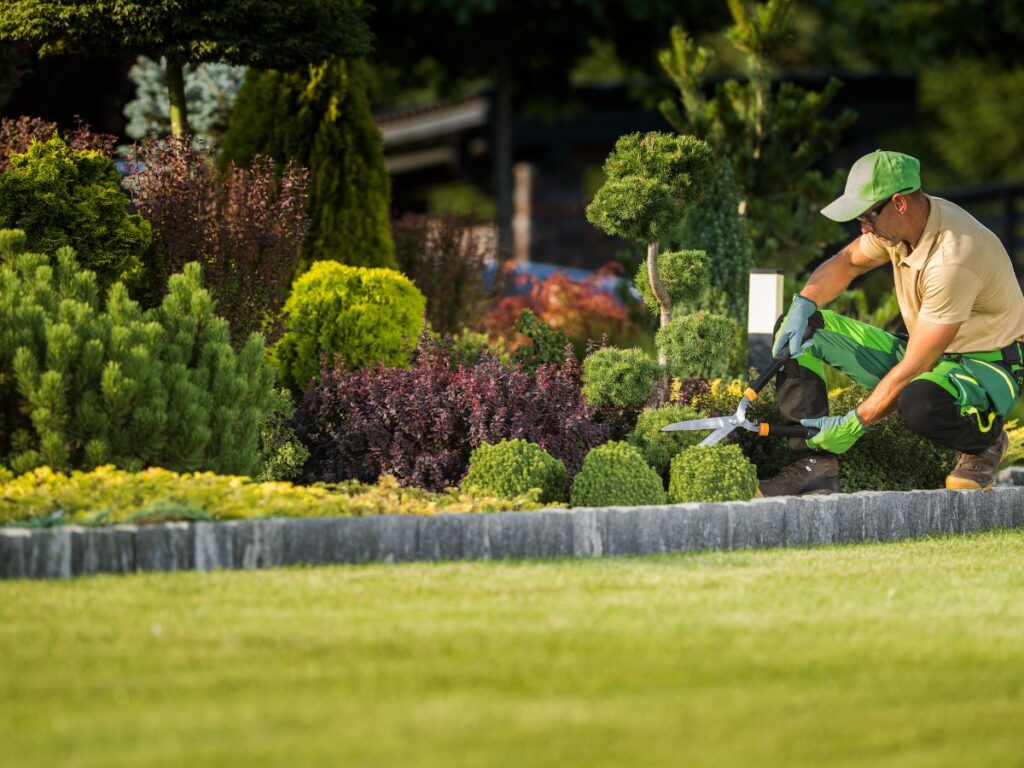
Most homeowners who hire a lawn care company have the same experience at least once: a crew arrives, mows, blows the clippings off the driveway, and leaves — and the property looks exactly as good as a property that was just mowed. Which is fine. But mowing is not maintenance. It is one task in a system that, to produce a genuinely healthy and attractive landscape, needs to address a range of conditions that change every week throughout the season.
Green Earth Landscape Management approaches landscape maintenance differently. Our weekly C.A.R.E. visits — a structured framework that covers the full scope of what a property needs on each visit — are designed to deliver consistent, proactive care rather than reactive task-by-task service. This guide explains what C.A.R.E. stands for, what each component involves, and why the difference between routine maintenance and proactive property care becomes visible in the landscape over the course of a season.
What C.A.R.E. Stands For — and Why the Framework Matters

C.A.R.E. is Green Earth’s structured approach to every maintenance visit — a checklist-based system that ensures every component of the property’s care needs is assessed and addressed on every visit, not just the tasks that are most visible or most easily completed quickly.
The four components are:
- C — Clean: Removing debris, clippings, fallen leaves, and accumulated material from turf, beds, and hard surfaces
- A — Assess: Evaluating the condition of the landscape on this visit — identifying emerging issues, noting changes since the last visit, and flagging anything that needs attention beyond routine maintenance
- R — Respond: Addressing what the assessment identifies — adjusting the work scope based on what the property actually needs this week, not what was scheduled without reference to current conditions
- E — Enhance: Looking for opportunities to improve the property’s appearance and health beyond the maintenance baseline — edging that has drifted, a shrub that has grown out of shape, a bed that would benefit from attention
The C.A.R.E. framework turns a maintenance visit from a list of predetermined tasks into an adaptive service that responds to what the landscape actually needs each week. The difference is most visible over time: properties on C.A.R.E. visits do not develop the gradual decline that properties on task-only maintenance programs accumulate — because emerging issues are caught during the assess phase and addressed before they compound.
C — Clean: What This Component Covers on Every Visit

Lawn mowing — not just the cut
Mowing is the most visible component of a maintenance visit, but Green Earth’s approach to mowing treats it as a turf health practice, not just a cosmetic task. The height of cut is adjusted seasonally — higher in summer to reduce heat stress and moisture loss, lower in spring when the lawn is growing vigorously and a tighter cut encourages denser tillering. Mowing pattern is rotated on successive visits to prevent the soil compaction and turf grain that develops when mowing always runs in the same direction.
Blade sharpness matters more than most homeowners realise. Dull mower blades tear grass rather than cut it — leaving ragged blade ends that create entry points for disease, turn brown at the tips, and produce a noticeable visual difference compared to the clean cut of a sharp blade. Green Earth maintains sharp blades as a standard practice, not a periodic attention item.
Edging and border definition
The visual crispness of a landscape is largely determined by edge definition — the line between turf and bed, between lawn and hardscape, between driveway and grass. Edges that are consistently maintained produce the clean, intentional look that distinguishes a professionally maintained property from a home that is mowed but not maintained. Edging along beds and hard surfaces is included on every visit where the edge definition has softened since the previous visit.
Debris and clipping cleanup
Grass clippings left on hard surfaces are tracked into the home, stain pavement, and block drainage. Clippings left in beds create a matted layer that promotes fungal growth. All hard surfaces are blown clean of clippings, and beds are kept clear of grass clippings and fallen debris on every visit. In fall and through winter, leaf accumulation is addressed as part of the clean phase — not deferred to a separate seasonal service.
A — Assess: What Green Earth Looks for on Every Visit
The assessment phase is what makes the C.A.R.E. framework fundamentally different from task-only maintenance. Rather than completing a predetermined checklist and leaving, our team evaluates the landscape on each visit and identifies what has changed — and what those changes mean for what the property needs.
Turf condition monitoring
Each visit includes an assessment of lawn colour, density, and growth rate. Yellowing in specific areas can indicate irrigation problems, nutrient deficiency, disease, or pest activity — all of which have different responses. Thin areas that have developed since the last visit flag emerging moss, disease, or physical damage that should be addressed before it expands. Changes in growth rate signal the need for mowing height adjustment or a transition between growth seasons.
Irrigation system observation
Weekly maintenance visits provide a consistent observation platform for irrigation system condition. Heads that are not functioning correctly, zones that are over- or under-watering, and leaks or pressure issues are most often identified by someone who sees the system operate regularly and notices when something has changed. This is not a formal irrigation inspection on every visit — it is the natural benefit of consistent presence on the property.
When the assessment identifies an irrigation issue that needs professional attention, our irrigation services in Port Orchard from Green Earth work alongside the C.A.R.E. maintenance program — the same company handles both, which means what is observed during maintenance is communicated directly to the team that can address it.
Weed and pest pressure
Early identification of emerging weed populations and pest activity is one of the highest-value outputs of regular professional maintenance. A weed population that is spotted and addressed at 10 plants in April is not 1,000 plants in June. Spider mite damage on a shrub identified in its early phase is treatable; spider mite damage discovered when the shrub is defoliated is not. The assess phase of every C.A.R.E. visit includes a scan for these conditions so the respond phase can address them before they compound.
Plant health and structural issues
Ornamental plants develop issues — disease, nutrient deficiency, structural problems from storm damage or uneven growth — that become more serious if left unaddressed. The assess phase includes a review of the visible condition of plantings in beds and borders, flagging anything that needs attention beyond routine maintenance. This is not a full horticultural assessment on every visit, but it consistently catches the issues that standard mow-and-blow maintenance programs miss entirely.
R — Respond: How Green Earth Adapts to What the Assessment Finds
The respond component is where the C.A.R.E. framework produces its most tangible difference from standard maintenance programs. Standard maintenance programs complete the same predetermined task list on every visit regardless of what the property actually needs that week. The C.A.R.E. approach adjusts the visit based on what the assessment identified.
Practical examples of what this looks like in practice:
- A section of bed has significant weed emergence since the last visit — the respond phase allocates time to address it before it establishes further, rather than deferring to a scheduled weeding visit that may be weeks away
- An area of lawn is showing early signs of fungal disease — the assessment identifies it, and the respond phase may include a treatment recommendation, a change in mowing protocol for that area, or communication to the homeowner about the emerging issue
- A shrub has produced significant new growth since the last visit and is beginning to encroach on a pathway — responsive pruning addresses it before it becomes a scheduled pruning project
- A storm has deposited significant debris on the property between scheduled visits — the assess phase identifies the scope and the respond phase allocates the time to address it rather than completing a standard visit scope that does not reflect current conditions
This adaptive approach requires a team that is trained to observe and empowered to respond, not just execute a task list. It is also what creates the cumulative improvement that characterises Green Earth properties over a season — problems do not accumulate between scheduled interventions because they are caught and addressed at each visit.
E — Enhance: Going Beyond Maintenance to Improve the Property
The enhance component of C.A.R.E. visits is the layer that lifts landscape maintenance from property upkeep to genuine improvement. While the clean and respond phases address what the property needs to maintain its current state, the enhance phase looks for opportunities to actively improve it.
This might look like:
- Re-edging a bed that has been consistently maintained but where the edge line has gradually drifted from the original design
- A light trim of ornamental grasses or shrubs that have grown slightly out of their intended shape — not a full pruning, but the kind of responsive grooming that prevents the need for more significant intervention later
- Raking a light accumulation of leaves from a bed before they mat down and create the moisture-retaining layer that promotes fungal growth
- Repositioning an edging stake or bed border element that has shifted
- Noting and reporting a landscape improvement opportunity that the homeowner may want to consider — a planting gap, a hardscape section that has settled, an irrigation zone that is covering a bed inconsistently
The enhance phase does not add significant time to most visits — it is the orientation of the team toward improvement rather than completion. Over a season, the cumulative effect is a property that is consistently getting incrementally better rather than slowly declining between major intervention events.
Seasonal Adjustments to C.A.R.E. Visits in Western Washington
The C.A.R.E. framework is consistent throughout the year, but its content shifts with the seasons in ways that reflect Western Washington’s specific conditions:
Spring (March–May):
The clean phase emphasises debris removal from winter, leaf removal, and bed cleanup after the dormant season. The assess phase is most intensive — identifying winter damage, moss establishment, irrigation startup condition, and the full scope of what the season’s work needs to address. The respond phase often includes moss treatment, early pre-emergent weed control, and the first overseeding or aeration of properties where winter damage warrants it.
Summer (June–August):
Mowing height adjustment to summer settings. Irrigation observation becomes more active as the dry season arrives and the system is in daily use. The assess phase watches for drought stress, summer pest activity, and the weed species that establish in Kitsap County’s drier summer months. Enhance visits focus on maintaining the appearance established in spring.
Fall (September–November):
Leaf management becomes the primary clean component — Pacific Northwest leaf fall is extended, and the assess phase monitors the accumulation rate and adjusts cleanup frequency accordingly. Aeration and overseeding are the primary respond-phase recommendations for lawns where summer revealed density problems. Pre-emergent application for winter annual weeds. Irrigation winterisation.
Winter (December–February):
Reduced mowing frequency reflects slower turf growth. Clean visits focus on accumulated debris, storm damage, and the leaf layer that continues to fall through December in this climate. The assess phase watches for drainage issues revealed by heavy rain and for early moss establishment that can be addressed before it expands. Winter is also when Green Earth’s commercial clients benefit most from consistent maintenance — a commercial property that is maintained through the wet season looks professional year-round rather than neglected until spring.
C.A.R.E. Visits for Commercial Properties and HOAs
The C.A.R.E. framework applies equally to commercial properties and HOA communities across the South Puget Sound. For commercial properties, consistent and proactive maintenance directly affects how tenants, clients, and customers perceive the property — and a commercial landscape that deteriorates gradually between major seasonal interventions communicates neglect in a way that affects those perceptions every day. Our commercial landscape maintenance services in Kitsap County from Green Earth include the same C.A.R.E. framework — adapted to the scale and visibility requirements of commercial and HOA properties.
What C.A.R.E. Visits Accomplish Over a Full Season
The cumulative benefit of consistent C.A.R.E. maintenance becomes most visible when comparing properties that have been on the program for a full season against their prior state or against neighbouring properties on standard maintenance schedules:
- Moss and weed populations are significantly lower — because they have been consistently identified and addressed rather than allowed to establish between seasonal interventions
- Turf density is higher — because thin areas are identified early and overseeding or aeration is recommended before the thin areas become moss-dominated patches
- Plant health is better — because disease and pest issues are caught in their early stages and addressed rather than discovered when the plant is significantly damaged
- The property looks consistently maintained rather than freshly maintained — the visual difference between a property that has been cared for every week and one that is cleaned up periodically is immediately apparent to anyone who visits regularly
The C.A.R.E. approach is why Green Earth clients consistently describe the 100% satisfaction that our guarantee promises — because properties that receive consistent, proactive attention do not accumulate the deferred maintenance that produces dissatisfaction. Schedule landscape maintenance services in Port Orchard with Green Earth Landscape Management by calling (360) 340-6803 or requesting an estimate online.
To learn more about what a C.A.R.E. maintenance program includes for your specific property and what it costs, explore Green Earth’s residential landscape maintenance services for Port Orchard and Western Washington — and discover what consistent, proactive care does for a landscape over a full season.
📞 Call (360) 340-6803 — Landscape Maintenance Services in Port Orchard, WA | Green Earth Landscape Management