
Western Washington winters are hard on landscapes. By the time March and April arrive in Port Orchard and across Kitsap County, lawns have endured months of rain, wind, low light, and cold — and the evidence is visible everywhere: matted grass, accumulated debris, last fall’s leaves that did not quite get cleared, moss working its way across the turf, and dead plant material that has been sitting on beds since October. A lawn that looked reasonable going into November often looks genuinely rough coming out of March.
Spring cleanup services are not just cosmetic. They are functional — a set of targeted interventions that clear the debris load, assess winter damage, and prepare the soil and turf for active growth in the season ahead. This guide covers what a thorough spring cleanup in Port Orchard, WA actually involves, why Western Washington’s specific conditions make it more important than in most other regions, and how Green Earth Landscape Management approaches the seasonal refresh that sets the lawn up for the rest of the year.
What Western Washington Winter Does to a Lawn

To understand why spring cleanup matters specifically on the South Puget Sound, it helps to understand what the preceding five or six months have done to the landscape:
- Moss invasion: Port Orchard’s combination of low winter sun, consistent moisture, and acidic soil creates the ideal conditions for moss to establish in turf. A lawn that had modest moss in autumn will often have significantly more by spring — moss spreads aggressively through wet months and can cover substantial areas of turf given a single season of minimal maintenance
- Thatch and matting: Grass that has grown slowly or not at all through winter tends to mat down under the weight of rain and foot traffic, creating a compressed layer at the soil surface that restricts the airflow and water penetration the roots need in spring
- Accumulated debris: Wind-blown leaves, small branches, and organic debris accumulate throughout winter. The layer of debris on the lawn surface blocks sunlight from reaching the grass below and creates a moist environment that promotes fungal disease and moss growth
- Soil compaction: Wet soil compacts more readily than dry soil under foot traffic and equipment weight. Winter foot traffic — even light use — leaves many lawns with compacted surface soil that restricts root development and water infiltration as the growing season begins
- Weed emergence: Many weed species germinate in cool, moist conditions — meaning spring in Kitsap County is ideal germination weather. Weeds that were dormant through winter begin competing with turf grass for the nutrients and water the lawn needs for spring recovery
What Spring Cleanup Services Include in Port Orchard
A thorough spring cleanup from Green Earth Landscape Management is not a single task — it is a sequenced set of interventions that address each of the winter damage categories above:
Debris and leaf removal
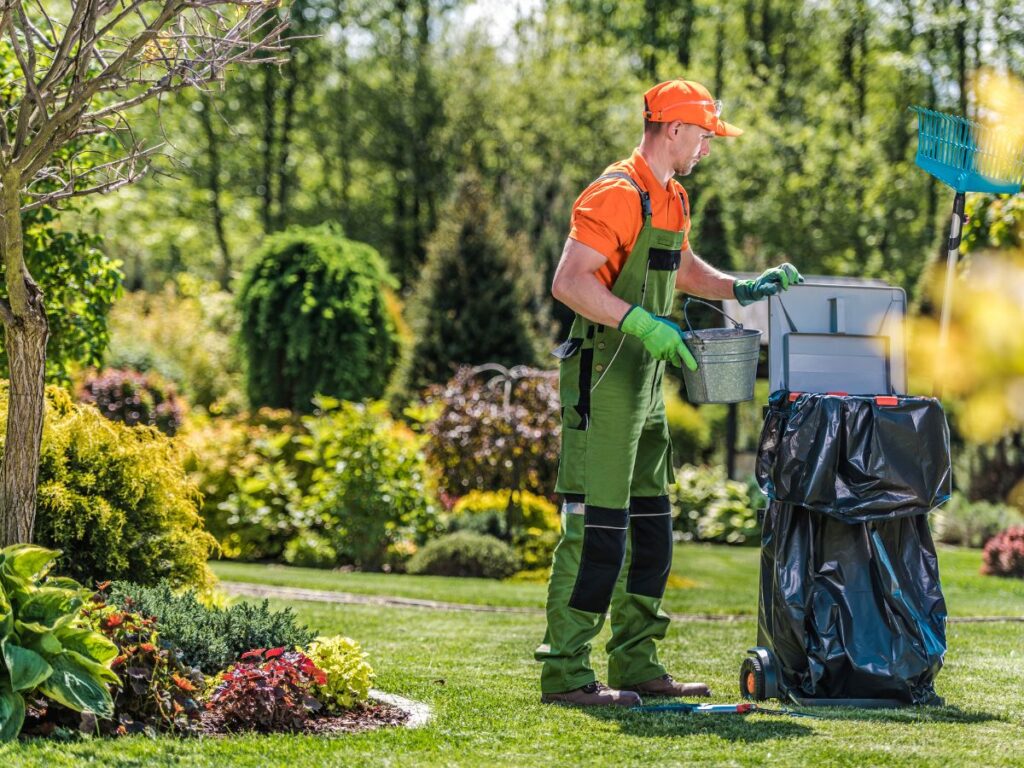
The starting point of any spring cleanup is clearing the accumulated debris that has built up through winter. Leaves, small branches, windblown material, and any plant matter that decomposed through the wet months are removed from lawn surfaces, beds, and hard surfaces. In Port Orchard and the surrounding South Puget Sound area, leaf removal is often more significant in spring than in fall — Pacific Northwest falls are mild enough that many leaves do not fully drop until late November or December, and some continue to fall through the winter.
Thorough leaf removal is not just cosmetic. Leaves left on the lawn surface block light, create ideal conditions for fungal disease, and provide the carbon-rich organic layer that supports moss establishment. Removing that layer is the first step in giving the turf a fair start to the growing season.
Bed cleanup and edging
Landscape beds that have accumulated winter debris — fallen leaves, dead perennial material, and organic matter — are cleaned out and re-edged where the edge definition has softened over winter. Mulch that has degraded or washed during heavy rain periods is assessed and, where needed, fresh mulch is applied to suppress early weed germination and retain moisture during spring’s variable weather.
Pruning and dead material removal
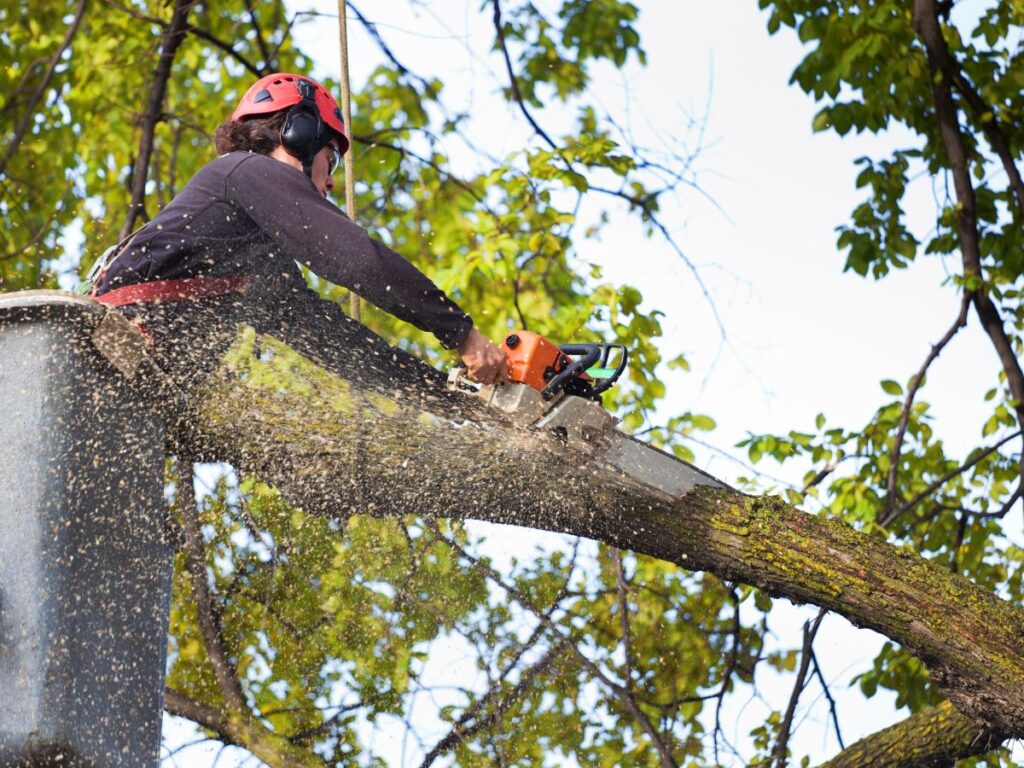
Winter reveals which plants and shrubs have dead branches, dieback from cold exposure, or pest damage that was not visible in summer. Spring cleanup includes pruning dead and damaged material, which allows plants to direct energy into new growth rather than trying to maintain dead tissue. For ornamental grasses and late-season perennials that were left standing through winter for visual interest or wildlife value, spring is the appropriate time for cutback before new growth begins.
Moss treatment
For Port Orchard lawns with significant moss accumulation — which is most lawns that have not had regular maintenance — spring cleanup includes targeted moss treatment. This is typically a two-step process: treatment to kill existing moss (iron-based products are standard in the Pacific Northwest and are effective without damaging the surrounding turf), followed by raking or dethatching to remove the dead moss material that would otherwise mat down and continue to smother the grass below.
Moss treatment in spring is most effective because the moss is actively growing and therefore most susceptible to treatment, and because removing it before the rapid turf growth of May and June allows the turf to quickly fill the cleared areas.
Lawn assessment
A spring cleanup is also the right moment for a professional assessment of the lawn’s overall condition: areas of winter kill that will not recover and need reseeding, sections where thatch buildup warrants dethatching or aeration, drainage problems that have been revealed by the wet season, and opportunities for improvement that the homeowner may not have noticed from inside the house during the winter months.
The spring cleanup assessment often informs the maintenance plan for the rest of the season. Our residential landscape maintenance services in Port Orchard from Green Earth Landscape Management build on the spring reset — keeping the lawn and beds in the condition the cleanup establishes throughout the growing season.
Why Spring Timing Matters in Western Washington
The timing of spring cleanup in the Pacific Northwest is more specific than most homeowners realise. There is a window — roughly March through mid-April in Port Orchard — where the cleanup produces the best outcomes:
- Early enough to clear debris before turf growth accelerates: Once grass begins actively growing in April and May, debris and dead material becomes entangled with new growth, making removal more difficult and more disruptive to the turf
- Late enough that winter damage is fully visible: Scheduling cleanup in February — before the full picture of winter damage is apparent — risks missing dead plant material that will become visible as temperatures rise
- Before moss has produced new spores: Moss treated and removed before it sporulates in spring does not immediately reinvest in establishing new colonies the way moss treated later in the season can
- Before weed seeds germinate at scale: Pre-emergent weed control applied during or shortly after cleanup is most effective when applied before weed seeds have germinated — which in Kitsap County typically happens in earnest from mid-April through May
Missing this window — scheduling cleanup for June because the lawn “still looks okay” in April — means the best intervention moment has passed and the cleanup is working against active turf growth and established weed germination rather than ahead of them.
Leaf Removal Services — Why Fall Leaves Become a Spring Problem
Port Orchard homeowners who maintain their own lawns sometimes find that despite raking in October, there is still a significant leaf layer on the lawn come March. This is a predictable characteristic of the Pacific Northwest landscape:
Pacific Northwest deciduous trees — big-leaf maple, red alder, Oregon white oak, and the ornamental maples common in residential landscapes — drop their leaves over an extended period from October through December. Heavy rain and wind redistribute leaves from neighbouring properties throughout winter. And the leaf material that does accumulate tends to mat in Western Washington’s moisture, creating a dense layer that is harder to remove than dry, loose fall leaves.
For homeowners who prefer to have the full seasonal cycle managed professionally, our seasonal yard cleanup and leaf removal services from Green Earth in Kitsap County include both the spring and fall cleanup phases as part of comprehensive landscape maintenance — ensuring the debris cycle never gets ahead of the turf’s recovery capacity.
What Happens After Spring Cleanup — The Season Ahead
Spring cleanup is the starting line, not the finish line. A lawn that has been thoroughly cleaned, assessed, and prepared in March and April is positioned well for the growing season — but the growing season in Western Washington is long, and maintaining that position requires consistent attention through May, June, July, and beyond.
For Port Orchard homeowners, the most common follow-on services to spring cleanup are:
- Lawn aeration and overseeding: For lawns with significant compaction, thatch, or thin turf revealed by the spring cleanup, aeration and overseeding in spring (or fall) directly addresses the underlying causes of the winter damage pattern
- Weed control: Pre-emergent and early-season post-emergent weed treatment capitalises on the cleared state that spring cleanup creates — most effective when applied to a lawn that has had debris removed and is not trying to compete with an established weed population
- Irrigation system startup: Spring is when irrigation systems come back online after winter shutdown. Startup should include a full inspection of heads, valves, and programming to confirm the system is functioning correctly before the lawn needs supplemental water in early summer
- Mulching and planting: Beds that have been cleared and assessed during cleanup are ready for fresh mulch application and any new planting — either replacing plants that did not survive winter or filling in design gaps identified during the assessment
Spring is also the busiest season for planting, sod installation, and landscape renovation. If your spring assessment reveals areas that need more than maintenance — new beds, lawn replacement, or a redesigned landscape space — our landscaping services in Port Orchard and Kitsap County from Green Earth Landscape Management take the conversation from cleanup to transformation.
Commercial and HOA Spring Cleanup in Port Orchard
Spring cleanup needs are not limited to residential properties. Commercial properties, HOAs, and condominium communities across Kitsap County have the same winter accumulation issues — often at larger scale and with more visibility stakes. First impressions of a commercial property or HOA community are made at the entrance and along the primary landscape areas, and emerging from winter with a neglected appearance affects how tenants, customers, and residents perceive the property. Our commercial landscape maintenance and spring cleanup services from Green Earth serve businesses, commercial properties, and HOA communities throughout the Port Orchard and South Puget Sound area with the same thorough approach we bring to residential work.
Schedule Spring Cleanup Services in Port Orchard, WA
Spring scheduling in Kitsap County fills quickly — the window between the end of the wet season and the start of active growth is narrow, and the best dates go fast. Schedule spring cleanup services in Port Orchard, WA with Green Earth Landscape Management by calling (360) 340-6803 or requesting an estimate online. Our team serves Port Orchard and surrounding communities throughout Western Washington with a 100% satisfaction guarantee on every visit.
We look forward to helping your lawn make a strong start to the season.
Call (360) 340-6803 — Spring Cleanup Services in Port Orchard, WA | Green Earth Landscape Management