
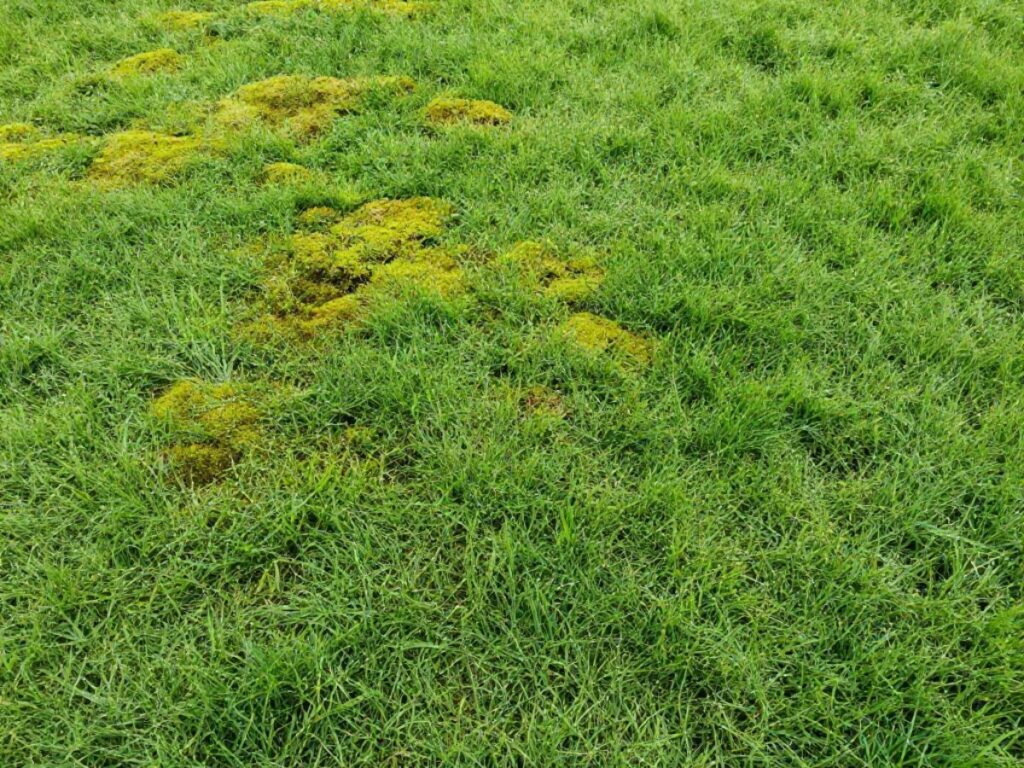
A lawn in Port Orchard or anywhere across the South Puget Sound does not stay thick and green on its own. Western Washington’s combination of heavy clay soils, low winter light, persistent moisture, and aggressive moss and weed pressure creates conditions where turf grass gradually loses ground — literally — if it is not regularly reinforced. The result, on lawns that have not been actively managed, is the familiar pattern: thin turf in shaded areas, bare patches where moss has taken over, sparse coverage that allows weeds to establish between the grass plants, and a lawn that looks noticeably worse each year despite watering and fertilising.
Overseeding is the intervention that reverses this trajectory. Done correctly, with the right seed selection for Pacific Northwest conditions, at the right time of year, and with the soil preparation that allows seed to establish rather than just sit on the surface, overseeding rebuilds turf density from within the existing lawn — without the cost and disruption of full replacement. This guide walks through how Green Earth Landscape Management approaches overseeding in Western Washington and why the approach matters as much as the service itself.
Why Western Washington Lawns Thin Over Time
Turf grass is a living plant that has a natural lifespan. Individual grass plants germinate, mature, produce seed, and eventually die — and unless the lawn is regularly overseeded, the rate of plant loss gradually outpaces natural self-seeding. In most of the country, this is a slow process. In Western Washington, it is faster:
- Low light stress in winter: Pacific Northwest winters provide 8 to 9 hours of daylight, often heavily filtered through cloud cover. Cool-season grasses can survive these conditions, but they cannot thrive — the energy available for growth and self-repair is significantly reduced through the November-March period
- Moss competition: Moss does not just coexist with turf grass — it actively displaces it. Moss establishes in thin areas, shades the soil surface, reduces the temperature available to grass roots, and creates an environment where new grass seed cannot establish. Once moss has a foothold in an area of the lawn, the turf will not naturally reclaim that space without intervention
- Disease pressure: Wet, cool conditions favour several fungal diseases that thin turf grass — red thread, dollar spot, and Pythium root rot are all common on the South Puget Sound and all weaken individual grass plants, reducing stand density over time
- Traffic and physical damage: Foot traffic, equipment passes, and winter use thin high-traffic areas and create bare paths that grass does not naturally recolonise without seeding
- Natural senescence: The original seed blend used when the lawn was established may have included species or varieties that are not well-suited to current conditions, or that have simply reached the end of their productive life. Overseeding introduces newer, more adapted varieties into the stand
Seed Selection for Pacific Northwest Lawns — Why It Matters More Than People Realise
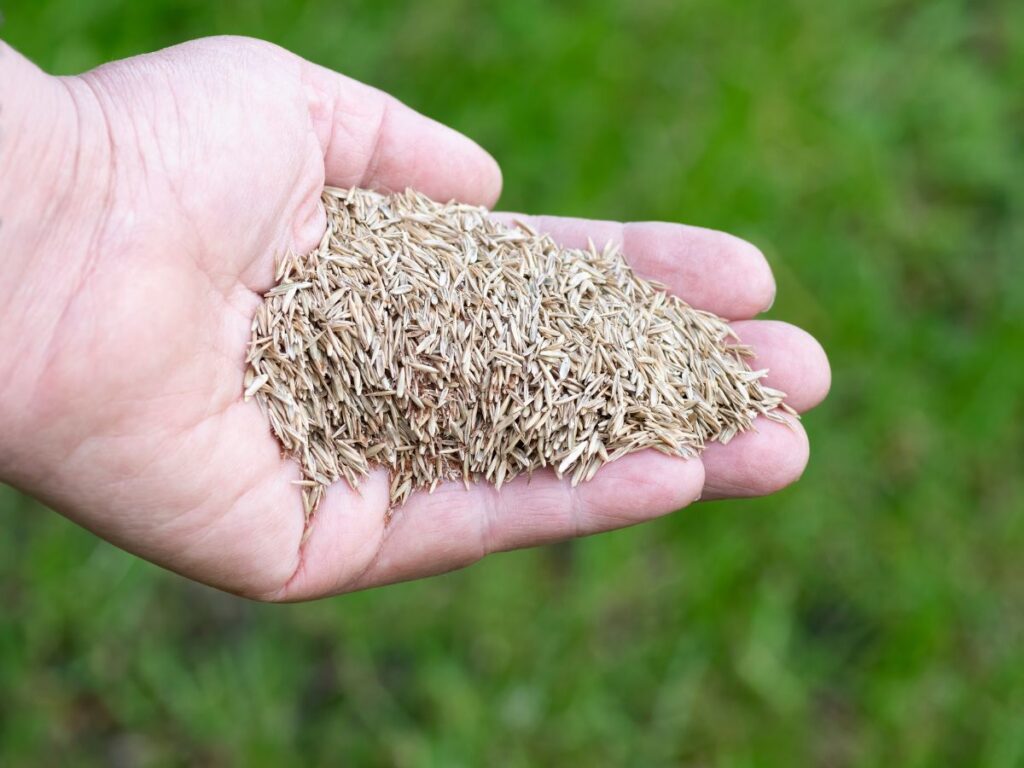
Not all grass seed performs equally in Western Washington. The characteristics that matter in this climate are specific and significantly different from what works in drier, sunnier regions:
Shade tolerance
Most residential properties in Port Orchard and Kitsap County have significant shade from mature conifers, deciduous trees, and neighbouring structures. Seed blends that perform well in full sun — particularly Kentucky bluegrass-dominated mixes — struggle under the shade conditions that are the norm rather than the exception in Pacific Northwest residential landscapes. Fine fescues, particularly creeping red fescue and chewings fescue, are the most shade-tolerant cool-season grasses and are essential components of any seed blend intended for typical Western Washington residential conditions.
Disease resistance
Perennial ryegrass and tall fescue both perform well in Pacific Northwest conditions when selected for disease resistance. Newer turf-type varieties of both species have been specifically bred for improved resistance to the fungal diseases most common in wet, cool climates — and the variety selected matters as much as the species. Overseeding with generic commodity seed blends that have not been selected for disease resistance is a common cause of disappointing results in this region.
Germination in cool soil temperatures
Spring overseeding in Western Washington happens when soil temperatures are still in the 50 to 60 degree Fahrenheit range — cooler than the ideal germination temperature for many grass species. Perennial ryegrass germinates reliably in cool soils and is typically the fastest-establishing option for spring renovation in Port Orchard. Tall fescue germinates more slowly but produces deeper roots that provide better summer drought tolerance once established.
Compatibility with existing turf
Overseeding adds new grass into a stand that already has existing grass plants. The new seed needs to be compatible with the existing turf in terms of texture, colour, and growth habit — otherwise the result is a visually patchy lawn where new plants are clearly distinguishable from old ones. Green Earth selects seed that is appropriate for the existing turf type on the property, not a generic blend applied to every lawn regardless of what is already there.
The Overseeding Process — What Determines Whether It Works
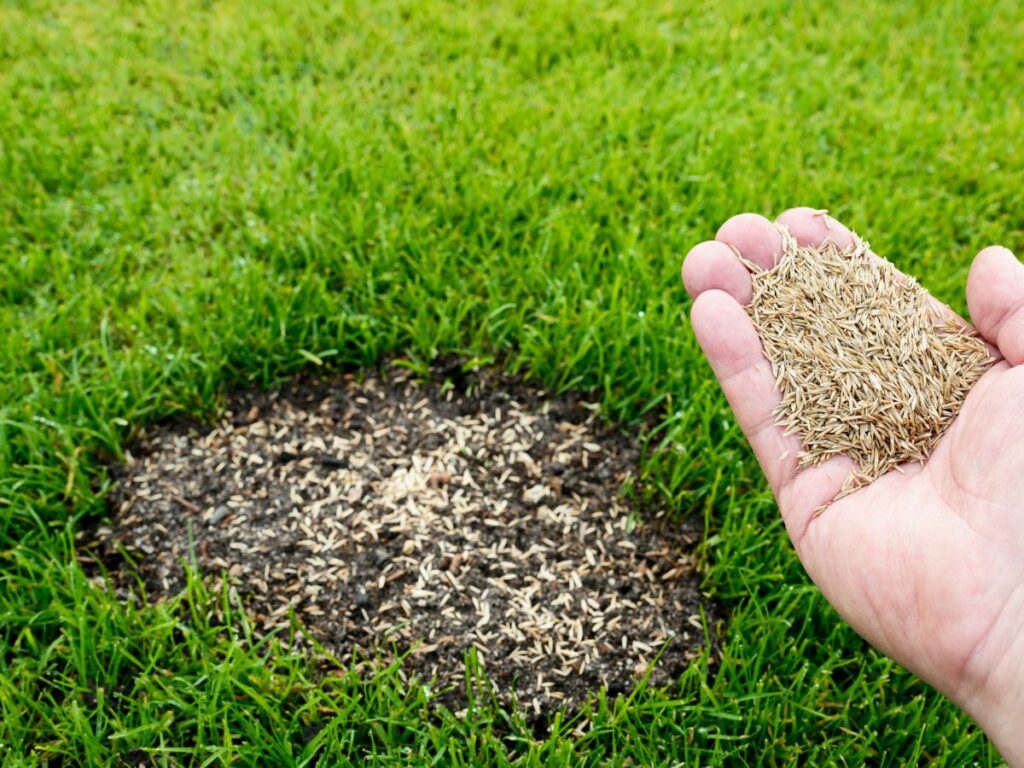
Overseeding failure — seed broadcast on a lawn that produces poor germination, thin stands that do not fill in, or results that look acceptable for a season and then return to the same state — is almost always a function of preparation and timing, not seed quality. The seed itself is relatively predictable; what determines the outcome is the environment the seed is placed into.
Step 1 — Soil preparation
Seed needs direct soil contact to germinate. Seed broadcast on a thick thatch layer, an undisturbed turf surface, or compacted clay soil will have poor germination regardless of how much seed is applied. The soil surface needs to be prepared — either through core aeration, which opens the soil and creates holes that provide direct seed-to-soil contact, or through dethatching and scarification that breaks up the surface layer and exposes mineral soil.
For most Port Orchard lawns, core aeration immediately before overseeding is the most effective and least disruptive preparation method. It simultaneously addresses compaction, creates the seeding environment, and deposits loosened soil cores on the surface that break down and improve the overall soil structure. On lawns with severe thatch — more than half an inch of compressed organic material at the soil surface — dethatching before aeration improves the outcome further.
Step 2 — Moss and weed management
Overseeding into a lawn with established moss or aggressive weeds is inefficient — the new seed is competing against entrenched competitors that have a significant establishment advantage. Effective overseeding in Western Washington typically includes moss treatment 2 to 4 weeks before seeding, allowing the moss to die and be removed before seed is applied, and a careful assessment of weed pressure that avoids applying pre-emergent herbicides (which also inhibit grass seed germination) in areas scheduled for overseeding.
Step 3 — Seed application
Seed is applied at rates calibrated to the level of renovation needed — lighter rates for thin but established turf, heavier rates for areas with significant bare ground or moss damage. Seed is distributed using a calibrated spreader in two passes at perpendicular angles to ensure uniform coverage without patchiness.
After overseeding, the new seedlings need consistent moisture and protection from traffic during the establishment period. Our residential landscape maintenance services in Port Orchard from Green Earth support new turf establishment — providing the ongoing care that maximises the return on the overseeding investment through the first growing season.
Step 4 — Starter fertiliser
New grass seedlings have a limited root system and cannot draw on the soil nutrient reserves that established grass can reach. A starter fertiliser applied with the seed provides the phosphorus-rich nutrition that supports root development in new seedlings and significantly improves germination rates and early establishment speed.
Step 5 — Irrigation management
Consistent moisture is the single most important factor in successful germination. Seed that dries out between watering cycles before the root system is established will fail to germinate or will germinate and then die before the seedling can support itself. In spring, Pacific Northwest rainfall often provides adequate moisture for germination without supplemental irrigation — but dry periods in May and June require active management to keep the seeded area moist.
When to Overseed in Western Washington — Spring vs Fall
Both spring and fall are viable overseeding windows in Port Orchard, with trade-offs:
Fall overseeding — the preferred window for most lawns:
Soil temperatures in September and October are still warm enough for rapid germination, and the mild Pacific Northwest autumn gives new seedlings a full season of low-stress growth before they face their first winter. Fall rainfall in Kitsap County reduces the irrigation management burden. And overseeding in fall means the turf is established and thickening before the spring moss and weed pressure that would compete with new seedlings in a spring seeding.
Spring overseeding — appropriate for specific situations:
Spring overseeding is effective when the lawn has sustained significant damage over winter — moss kill zones, disease damage, or physical damage that has left bare ground that cannot wait until fall. The trade-off is that spring seedlings are establishing during warming temperatures with increasing weed competition, and they face their first summer drought before they are fully established. Irrigation management in summer is more demanding after a spring seeding than after a fall seeding.
Green Earth recommends the timing appropriate to the specific lawn condition — not a blanket recommendation applied to every property regardless of what is actually needed.
When Overseeding Is Not Enough — Full Lawn Installation
Overseeding restores density to thin or patchy lawns with an intact soil structure and a reasonable percentage of surviving turf. When the lawn has deteriorated to the point where more than 50 percent of the surface is bare, heavily mossy, or dominated by weeds rather than grass, overseeding is often not the right solution — the seed is competing against too many established competitors in too many locations, and the outcome is rarely satisfying.
For lawns that have reached this point, full renovation — sod installation, complete re-seeding after soil preparation, or a combination approach — delivers a reliable result where overseeding would not. Our full lawn installation and landscaping services in Port Orchard from Green Earth Landscape Management include sod installation, new lawn seeding, and complete landscape renovation for properties where the existing turf cannot be salvaged through maintenance alone.
Hydroseeding is also an option for full renovation projects where budget or site conditions make sod installation impractical. Our hydroseeding services in Western Washington for lawns that need full renovation without sod apply seed, fertiliser, and protective mulch in a single application, producing faster and more uniform germination than broadcast seeding on unprepared soil — at lower cost than sod for larger areas.
Overseeding Results — What to Expect and How Long It Takes
Realistic expectations are an important part of overseeding success — both because they prevent disappointment when results take time to fully develop, and because they help identify situations where the treatment is not performing as it should and adjustments are needed.
- Germination: Perennial ryegrass typically germinates within 7 to 14 days under good conditions. Fine fescues and tall fescue take 14 to 21 days. If no germination is visible after 21 days and the seeded area has been kept moist, the cause — usually inadequate soil contact, seed displacement, or pest activity — should be investigated
- First season filling: New seedlings begin filling in within 4 to 6 weeks of germination, but full stand density takes a full growing season to develop. By fall after a spring seeding, or by the following spring after a fall seeding, the overseeded areas should be indistinguishable from the surrounding established turf in texture and density
- Long-term benefit: The new grass plants introduced by overseeding have a full genetic lifespan ahead of them. A well-overseeded lawn is denser, more disease-resistant, and better able to suppress moss and weeds than the thin stand it replaced — and that advantage compounds over subsequent seasons with regular maintenance
Schedule Overseeding Services in Western Washington
Whether your lawn needs targeted overseeding in thin and mossy areas or a more comprehensive renovation after a difficult winter, Green Earth Landscape Management provides the seed selection, soil preparation, and post-seeding care that produces lasting results — not temporary improvement that fades by the following year. Schedule overseeding services in Western Washington with Green Earth Landscape Management by calling (360) 340-6803 or requesting an estimate online.
Your lawn does not have to be thin and mossy every spring. Let us show you what it can look like.
📞 Call (360) 340-6803 — Overseeding Services in Port Orchard, WA | Green Earth Landscape Management